
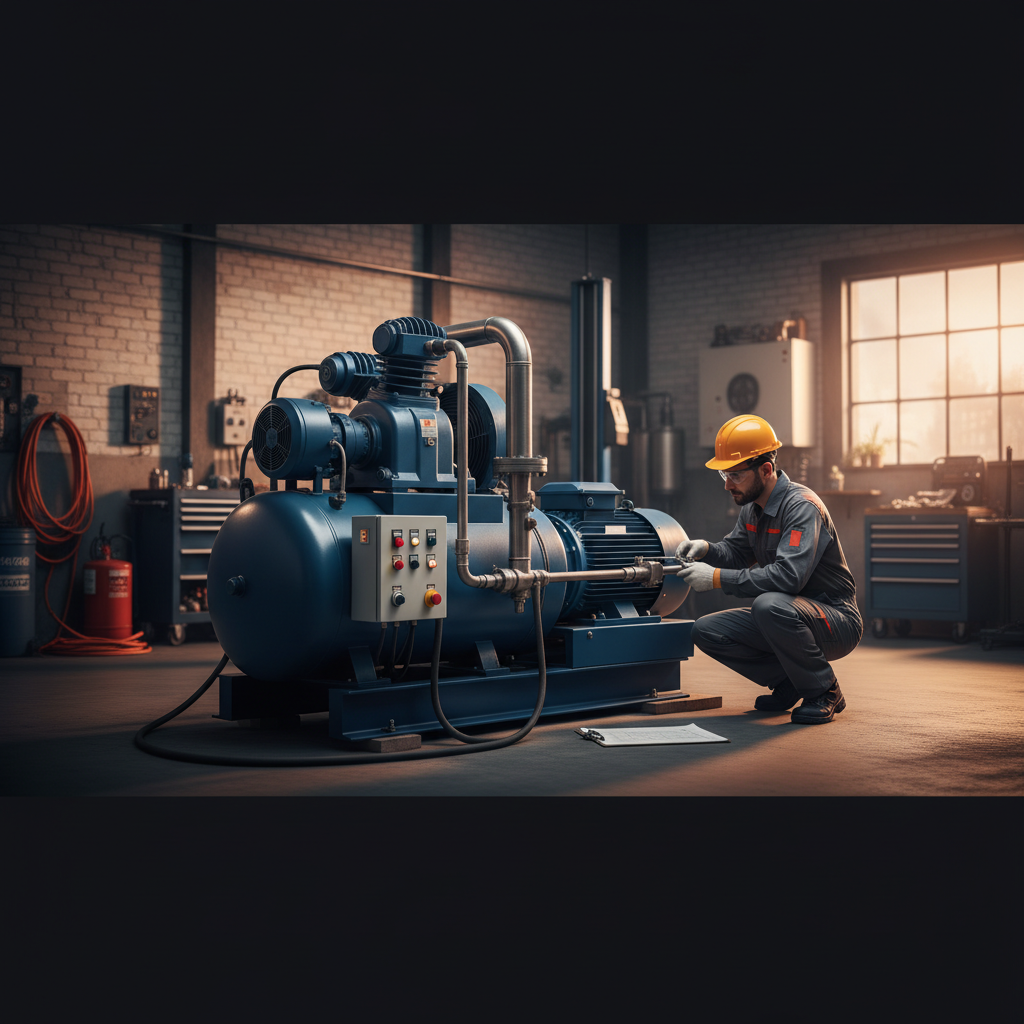
An air compressor is the backbone of most industrial shops. When it goes down, production stops. A preventive maintenance program is the difference between scheduled service and emergency repairs at the worst possible time.
Daily Checks
Every day, check oil levels on oil-flooded reciprocating compressors. Look for oil in the discharge lines and listen for unusual knocking or rattling. Verify that drain valves on air receivers are opened and closed to purge accumulated moisture. Condensate left in the tank accelerates internal corrosion.
Weekly Maintenance
Inspect and replace air filters if restricted — a clogged filter reduces volumetric efficiency and increases power consumption. Check belt tension on belt-driven compressors. Loose belts slip under load, reducing output and overheating the motor. Clean external cooling fins on the compressor pump and motor to maintain heat dissipation.
Monthly Tasks
Test safety valves by pulling the lever to verify free operation. Inspect all air hoses for cracks, kinks, or coupling damage. Check electrical connections for tightness — vibration loosens terminal connections over time. On rotary screw compressors, check oil quality and replace the oil filter. Look for oil carry-over in the discharge air, which indicates worn seals or clogged separators.
Annual Service
Annual maintenance should include full oil change, replacement of all filters (intake, oil, separator), inspection of valves, and belt replacement if showing any signs of wear. Schedule this during planned downtime to avoid interrupting production.