
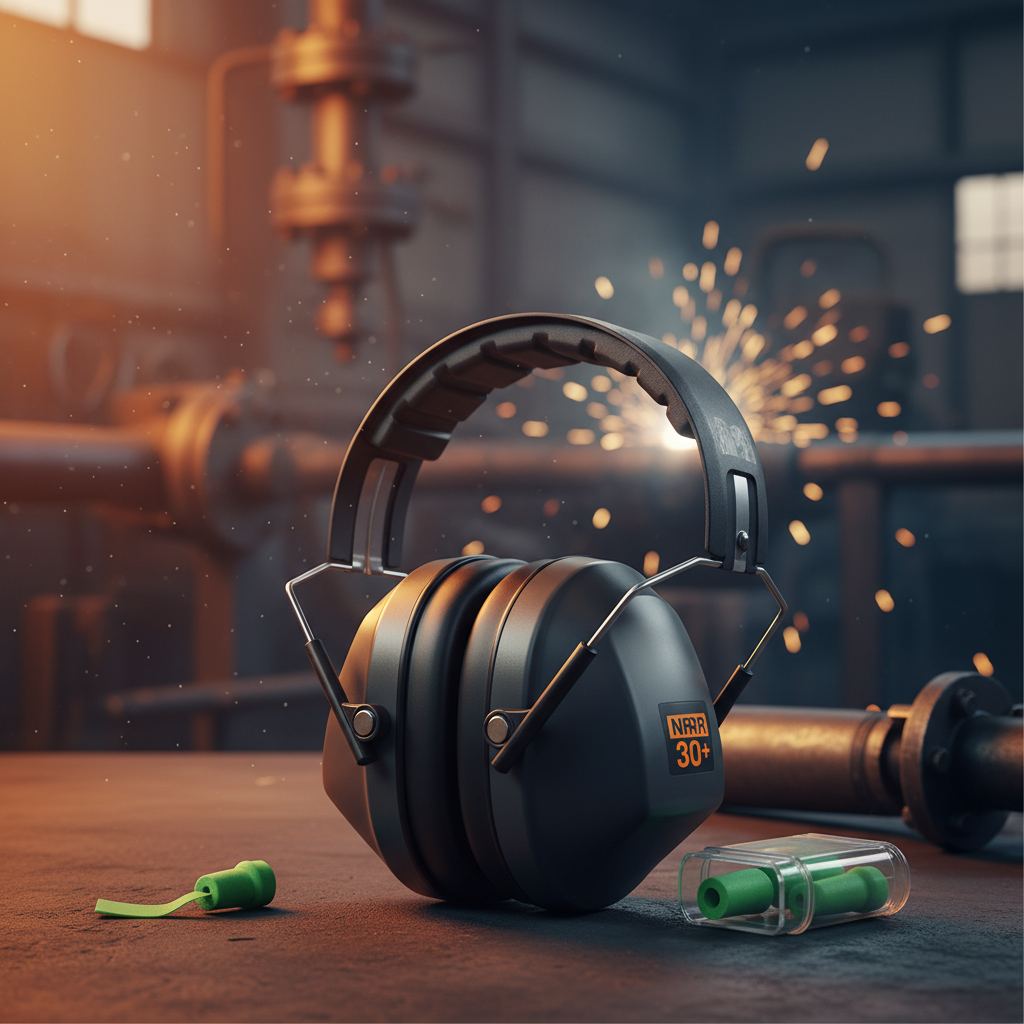
Noise-induced hearing loss is permanent and entirely preventable. Yet it remains one of the most common workplace injuries in manufacturing and construction. The problem isn't a lack of hearing protection — it's improper selection and poor fit.
Understanding NRR
The Noise Reduction Rating (NRR) measures how many decibels a hearing protector can reduce noise. The problem is that real-world NRR is significantly lower than the label value. OSHA's noise exposure calculations require subtracting 7 dB from the NRR and then halving the result to account for improper fit and real-world conditions. An NRR 25 earmuff might realistically provide only 9 dB of protection in practice.
Double Protection for Extreme Noise
For environments above 100 dB, OSHA permits and many safety professionals recommend wearing both earplugs and earmuffs simultaneously. Worn together, the protection adds up non-linearly — you get approximately 5-10 dB more protection than either method alone. Use earplugs rated NRR 29+ with over-ear muffs rated NRR 25+ in the loudest environments.
Fit and Comfort Are Non-Negotiable
The most protective device that workers won't wear provides zero protection. Earplugs must be inserted correctly — the ear canal must be visible when properly seated. For workers who dislike earplugs, comfortable over-ear muffs with adequate NRR are the better choice. Replace disposable foam plugs daily and reusable silicone plugs every 2-4 weeks.