
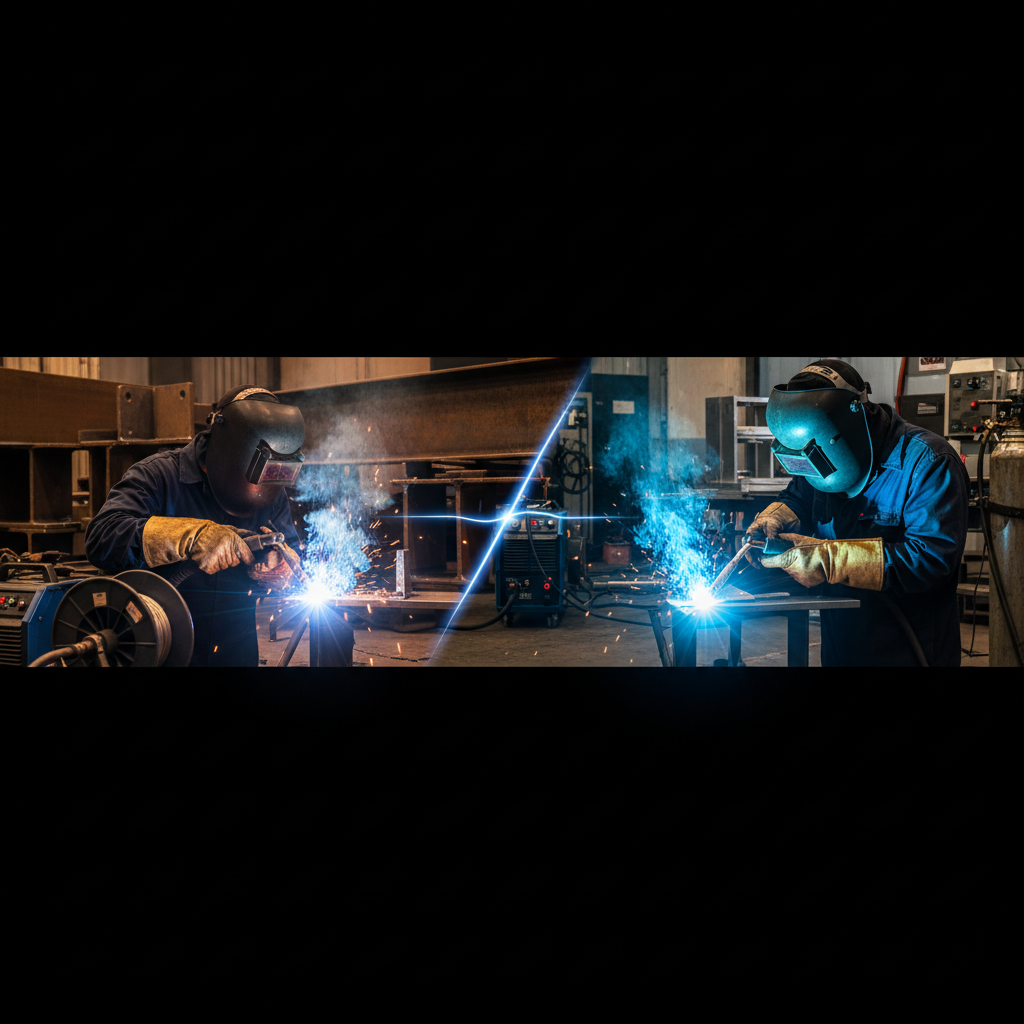
The MIG vs TIG debate is one of the most common questions in welding. Both processes produce quality welds, but the difference in equipment cost, setup time, and operator skill makes each suited to different applications.
When to Choose MIG
MIG welding is faster than TIG on most thicknesses — the continuous wire feed means you can maintain a steady arc without stopping to adjust parameters. MIG is also much more forgiving of operator error, making it the right choice for less experienced welders or production environments where consistency matters more than cosmetics. MIG works well on steel from 18 gauge to 1/2 inch plate and on aluminum 14 gauge and up.
When to Choose TIG
TIG is unmatched for aesthetic quality and precision. If appearance matters — automotive body work, architectural metal, food-grade fabrication — TIG produces welds that often require no finishing. TIG also offers superior control on very thin material, making it the process of choice for sheet metal and tubing work. On aluminum and stainless, TIG produces cleaner welds with better corrosion resistance.
The Bottom Line
For most fabrication shops, MIG is the primary process — it covers 80% of work efficiently. But investing in TIG capability opens doors to higher-margin precision work. Many shops run both processes side by side, using MIG for structural and production work and TIG for finished components.